Our grandson, Ender, has always loved animals. We once took him fishing when he was small, and while he was thrilled to catch a fish, he was devastated to realize that catching it meant it died. Seeing living creatures through his eyes makes me check my own heart and ask whether I’m truly valuing the God-given wonders around us.
That way of looking at the natural world has followed us onto the waterways. As we travel on Enderlily, we get front-row views of the wildlife that fills the sea and shore. It’s part of our experience out here. The curve of a heron’s neck, the thrill of seeing orcas rising to briefly touch our world, and the marvel of pulling a crab up from the deep, cold bottom never get old. We’ve seen hundreds of seals on our journeys, but we still stop and look every time we see one.
Each encounter with the marine life around us lets us enter another world for a moment or two. We see, hear, or touch something that lives in the sea and suddenly we’re reminded of the intricacy and complexity of life. How does a clam live and thrive buried in sand? How do wild geese know to fly in a vee pattern? Why do fish swim in schools? Each creature inhabits its own world, with its own needs supplied for; each unique. Yet all those worlds fit seamlessly together as part of God’s plan for His creation. Amazing.
Here’s just a small sampling of the marine world that keeps stopping us in our tracks…
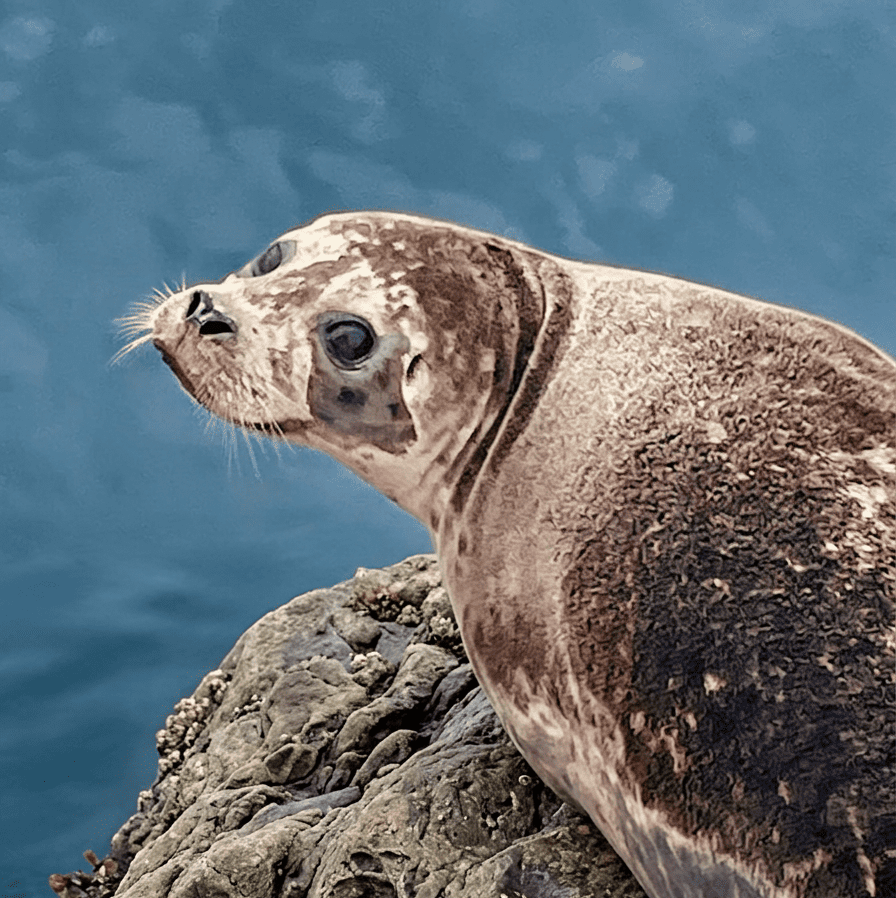
This school of fish is called a baitball. It’s a tightly packed group of thousands of little fish that form into a ball shape as a defense against predators.It’s a double-edged sword, though; it protects them from larger fish for the most part, but makes them vulnerable to seals, whales, and sea birds. We see sea otters in the shallow waters near the shore. Watching them, you get the sense that they’re not just getting through the day; they’re playful and full of mischief. Pacific Great Blue Heron are very common here. These guys love those baitballs!We dig for Littlenecks, Butter Clams, Cockles, and Varnish Clams. But if it’s loads of meat you want, you look for Horse Clams. They get huge; 6-8 inch long and weigh 3-5 pounds. You can see a small one at the top of the picture (about 4 inches), and the neck of another on the right side.There are three pods of orcas that live permanently in the inland waters of Washington and British Columbia. These large family units only eat fish, but you might also come across a smaller group of transient orcas who are just passing through. Those orcas eat mammals; seals, sea lions, porpoises, and whale calves. Though they’re called “killer whales”, there’s never been a recorded fatal attack on a human by a wild orca. And in fact, they’re not even whales; they’re the largest members of the dolphin family. Doesn’t matter what you call them… it’s always thrilling to catch a glimpse of these striking black and white beauties in the water!There are two groups of Canada Geese you’ll see in the Pacific Northwest. One group has taken advantage of the mild winters here and they no longer migrate. The other group drops in every Spring and Fall during their migration on the Pacific Flyway route. And here’s a crazy detail about them… Canada Geese have a special gland just above their eyes that acts as natural desalination system, filtering excess salt out of their blood and excreting it through their nostrils. This lets them safely drink saltwater and live in marine environments for extended periods without dehydrating.Spot Shrimp are the largest shrimp species on the West Coast. They’re named for the bright white spots on their sides – despite the fact that they also have white stripes on their shells. Maybe the name “Spot and Stripe Shrimp” was too much of a mouthful?This Pacific Harbor Seal is catching some sun – and a nap! While on our boat, my niece, Nadya, named the first seal she saw ‘Oscar’. Since then, every seal we see is an Oscar. This guy hung out in our dinghy for a few hours. He was pretty cute (though stinky!) but this isn’t normal behavior for a seal. He was injured and found the dinghy to be a safe place while he rested for awhile.We crab a lot, always looking for Dungeness crab. It’s prized for its especially sweet meat. And unlike Snow crab and King crab, there’s even more meat in the body than there is in the legs, giving them an exceptionally high meat yield.White gulls are always around. They’re highly intelligent, incredibly vocal, and fascinating to watch if you can stand the noise. People think of them as french fry stealers, but they mostly eat hard-shelled prey like clams, crabs, and mussels. They have remarkable problem-solving skills that allow them to get to the meat in amazingly creative ways.We’ve seen them dropping clams from high up in the sky onto hard surfaces in order to crack them open.
The water out here literally teems with life, and we’re blessed to witness something every day that causes us to pause and take note of some little miracle of God’s ingenuity and creativity. He called these creatures good, and we couldn’t agree more.
God said, “Let the water teem with living creatures, and let birds fly above the earth across the vault of the sky.” So God created the great creatures of the sea and every living thing with which the water teems and that moves about in it, according to their kinds, and every winged bird according to its kind. And God saw that it was good.” Genesis 1:20–21


Leave a Reply